

What Are Pro Stock Hockey Sticks?
Pro stock hockey sticks are custom-built sticks made for professional and high-level players, typically from leagues like the NHL, AHL, NCAA, Europe Leagues and multiple Junior Leagues like the CHL and USHL. Unlike retail sticks on the shelf, they are manufactured to exact player specifications for flex profile, curve, lie, shaft shape, and weight distribution.
Because teams often order more sticks than players actually use, many unused pro stock sticks make their way into the retail market at significant discounts. This creates a unique opportunity for amateur players to get pro-level performance at a fraction of the original team cost.
Pro Stock vs Retail Hockey Sticks
Retail hockey sticks are mass-produced for the average player, while pro stock models are built for the specific needs of individual pros. This difference affects everything from materials to how the stick actually feels and performs on the ice.
Key differences include:
- Custom specs
- Construction and materials
- Graphics and naming
Why Players Choose Pro Stock Sticks
Players choose pro stock sticks to get professional-level performance tuned to a specific play style, at prices that can rival or beat new top-end retail sticks. Serious players often feel a noticeable difference in shot release, puck feel, and balance compared to generic retail models.
Major benefits:
- Customization and feel
- Value for money
- Authentic pro specs
How to Read Pro Stock Codes and Specs
Every pro stock stick is marked with information that helps identify how it was built. Learning to read these details can help buyers find consistent specs over time.
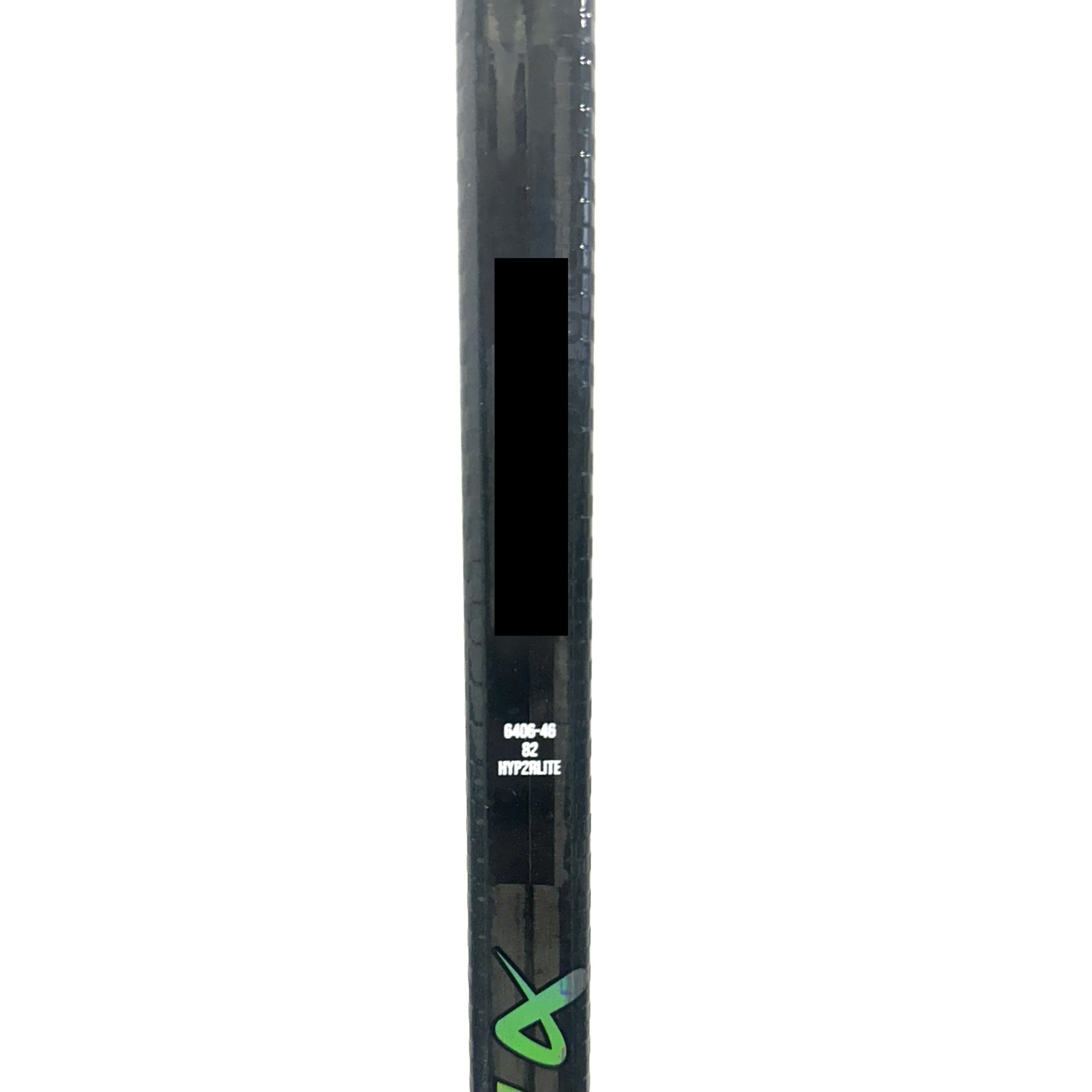
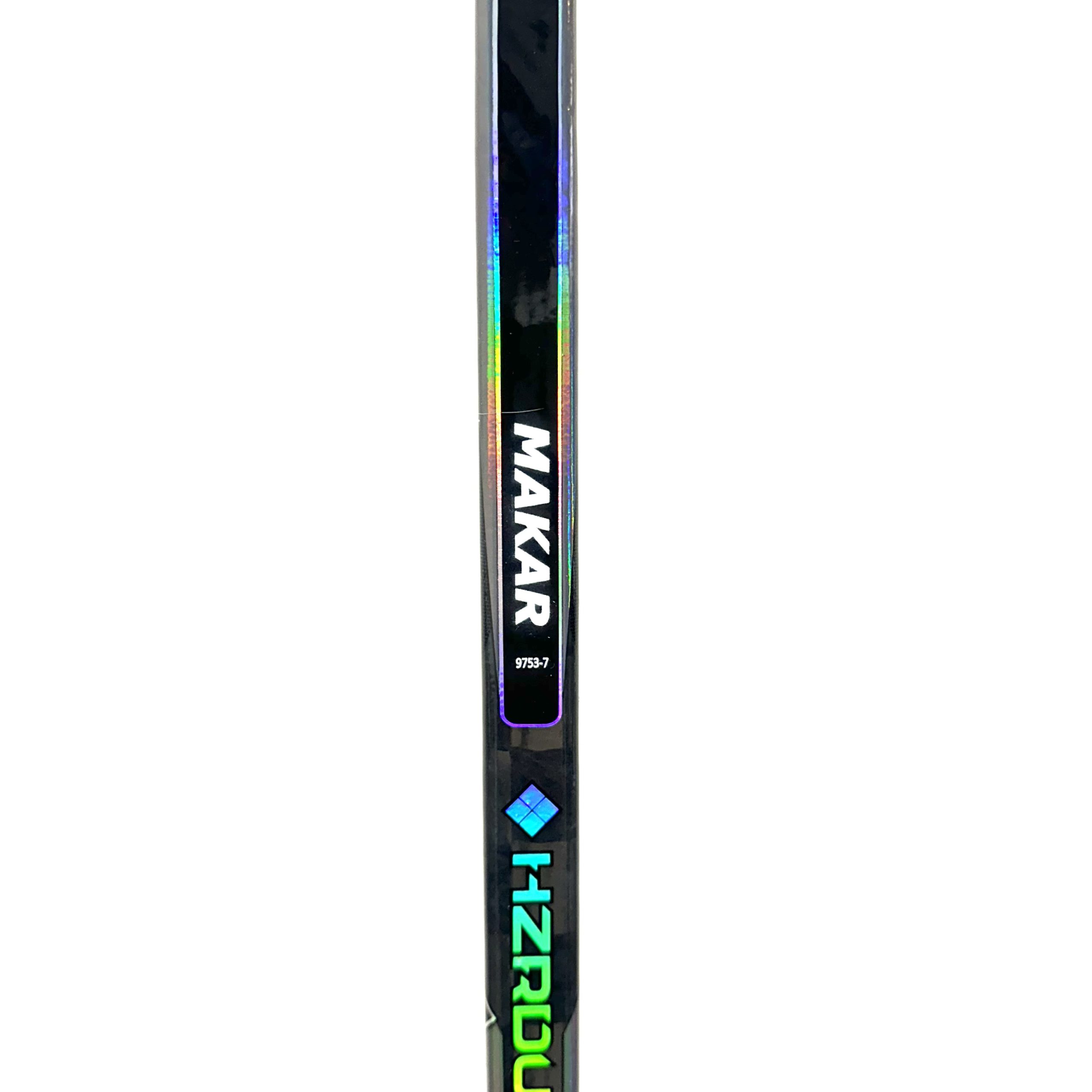
Elements you might see:
- Player name or initials on the shaft or name bar (you can notice that some of our sticks have the name blacked out. This is only for business purposes but you can always reach out to us if you would like to know what name is hidden underneath).
- Pattern codes that map to specific curves and lies, often using internal team or manufacturer naming.
- Flex numbers that may feel stiffer or whippier than retail sticks with the same rating due to different reinforcement or kick profiles.
- Batch codes indicating when and for which team or player the sticks were produced.
How to Choose the Right Pro Stock Stick
Choosing a pro stock hockey stick should start with your playing style and body mechanics, not just the name on the shaft.
Key factors to consider:
- Flex and length
- Kick point
- Curve and lie
- Handedness and position
- Make sure handedness is correct and consider position-specific needs; many defensemen prefer slightly stiffer, longer sticks with more neutral or heel curves for reach and clearing
Pro Stock Hockey Stick Flex
Flex is the measure of how much force is required to bend a stick one inch. It is one of the most important specs to get right — and one where the pro stock market requires a bit more attention than buying retail.
Unlike retail sticks where flex ratings are standardized across a line, pro stock sticks may feel stiffer or whippier than their labeled flex due to differences in reinforcement, kick point placement, and shaft construction built for a specific player’s needs.
General flex guidelines:
– Players typically use a flex rating roughly equal to half their body weight in pounds as a starting point
– Cutting a stick shortens it and increases effective stiffness — a 75 flex stick cut down two inches can perform closer to an 85
– Low-kick sticks feel whippier relative to their flex rating; mid-kick sticks feel stiffer at the same number
Common pro stock flex ranges by player type:
- Lighter forwards and quick-release shooters: 65–80 flex
- Power forwards and all-around players: 80–95 flex
- Defensemen and heavy shooters: 95–110 flex Pro stock sticks are available across the full flex spectrum.
How to Spot Authentic Pro Stock Sticks
With the popularity of pro stock sticks, there is also a risk of misrepresented gear and unofficial replicas.
Signs of authentic or high-confidence pro stock sticks:
- Player name, team markings, or organizational codes printed or labeled on the shaft.
- Unique pattern or flex codes that match known pro setups documented by teams, communities, or reputable builders.
- Consistency in build, finish, and quality across a batch of sticks from the same source.
- Pro Stock sticks can’t be replicated by cheaper Chinese factories because they are custom made for a specific player. On the other hand, since retail sticks are only available is specific curve and flex, with no customization whatsoever, are easy to replicate. A rule of thumb for spotting a pro stock stick is to check the name bar on the stick. If you see a standard “McDavid P28” on the shaft of the stick, this means that the stick is a retail sticks and has bigger chance of being a replicate.
Who Should (and Shouldn’t) Use Pro Stock Sticks
Pro stock sticks are ideal for experienced players who understand their preferred specs and can feel subtle differences in flex, kick, and curve. However, pro stock sticks are for everybody since you can always find the same classic specs found in stores.
It’s important to understand that it’s not because we buy a pro stock stick that the curve and flex are automatically different than the ones from retail sticks. Some players still like a good old P92 curve with a standard 87 flex so these sticks can be used by any kind of players, even if you are not looking for anything too different than retail specs.
For those who know what they like, however, pro stock hockey sticks can deliver a uniquely dialed-in combination of performance, feel, and value that is hard to match with off-the-shelf retail gear
Where to Buy Pro Stock Hockey Sticks
Genuine pro stock sticks are not sold through standard big-box retail channels; they come from specialty retailers, like Reference Hockey, who work with pro teams and high-level programs.
When buying, prioritize sellers that provide clear photos, honest condition grades, and detailed spec breakdowns of each stick.
Pro Stock Hockey Sticks by Brand
Not all pro stock sticks are created equal. Each major manufacturer has a distinct approach to construction, kick point engineering, and shaft geometry. Here is what to know about each brand before you buy.
Bauer Pro Stock Hockey Sticks
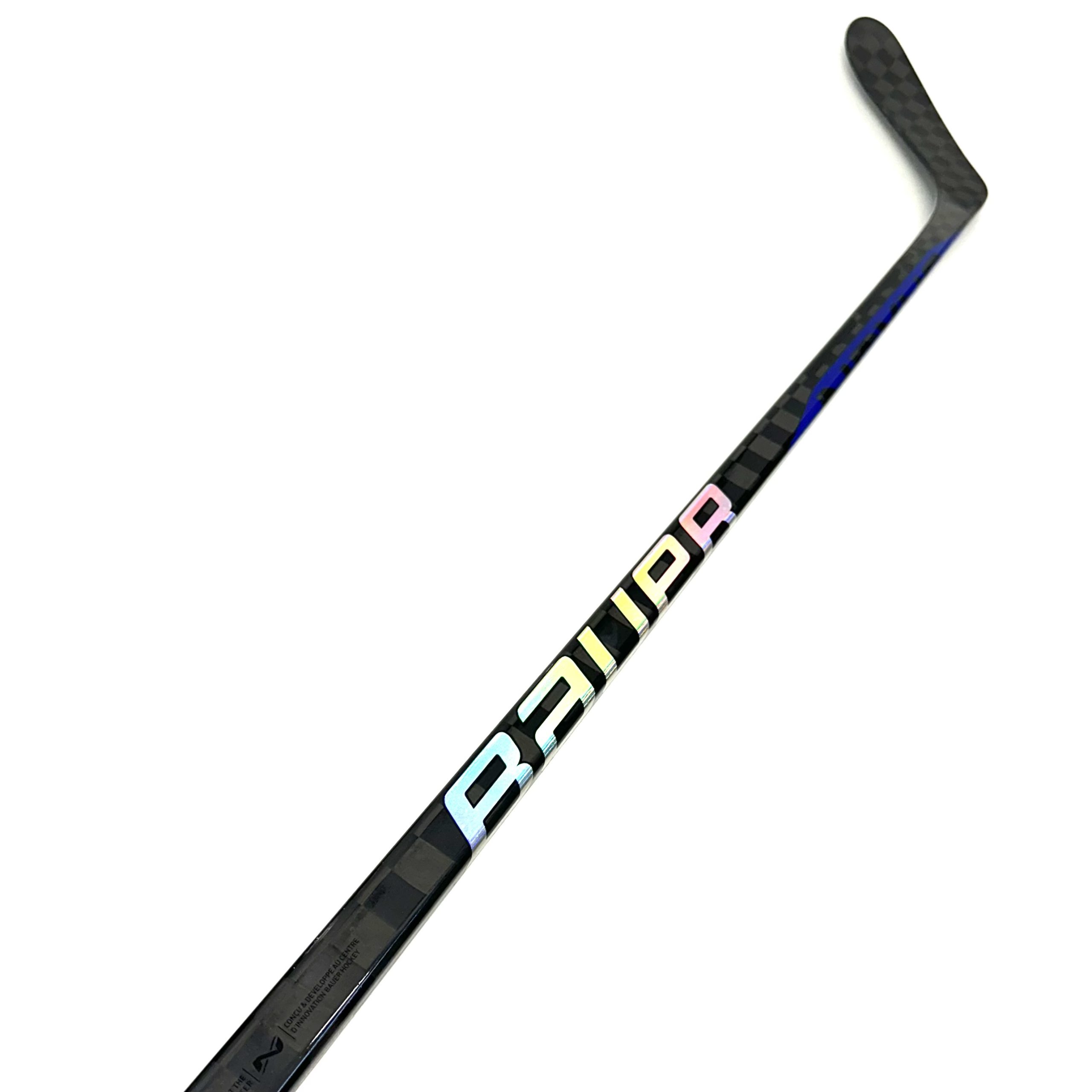
Bauer is the most widely available brand in the pro stock market, in large part because of how many NHL and AHL teams are outfitted with Bauer product. Their pro stock sticks tend to feature the same high-grade carbon layups used in their retail flagship lines, but with custom player specs that can differ meaningfully from what you find in stores.
Key things to know about Bauer pro stock:
- The Nexus line is one of Bauer’s most sought-after pro stock models, known for its mid-kick construction.
- If you are looking for a low kick point, then the Vapor line will be your go to with Bauer.
- Bauer uses internal pattern codes that don’t always map directly to retail curve names — learning these codes helps you find consistent specs.
- Ghost graphics (older paint jobs hiding newer technology) are common in Bauer pro stock and are not a sign of lower quality.
- CHL team markings (including WHL, OHL, and QMJHL clubs) frequently appear on Bauer inventory, often at excellent value.
Shop Bauer Pro Stock Hockey Sticks →
CCM Pro Stock Hockey Sticks
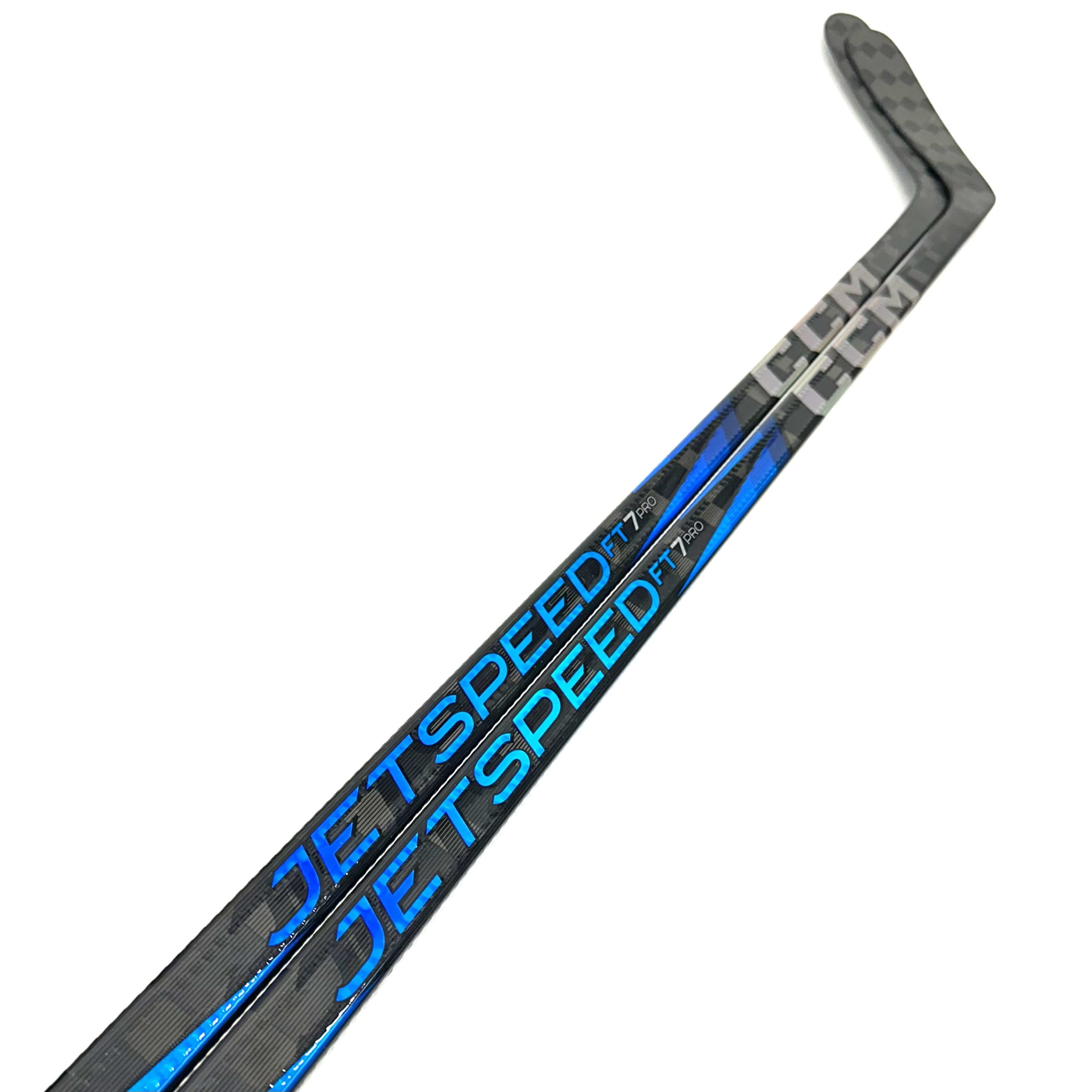
CCM is the other dominant force in professional hockey, and their pro stock inventory reflects the depth of their team partnerships across the NHL, AHL and other leagues. The JetSpeed and Trigger series generate the most secondary market volume.
Key things to know about CCM pro stock:
- The Trigger line is among the most popular CCM pro stock finds — low kick point, fast release, used by a wide range of forwards across all levels
- The Jetspeed series is favoured by players who want an hybrid kick point with a stiffer feel at comparable flex ratings
- CCM Tacks pro stock builds offer a traditional mid-kick feel suited to heavy slap shooters and defensemen
Shop CCM Pro Stock Hockey Sticks →
True Pro Stock Hockey Sticks
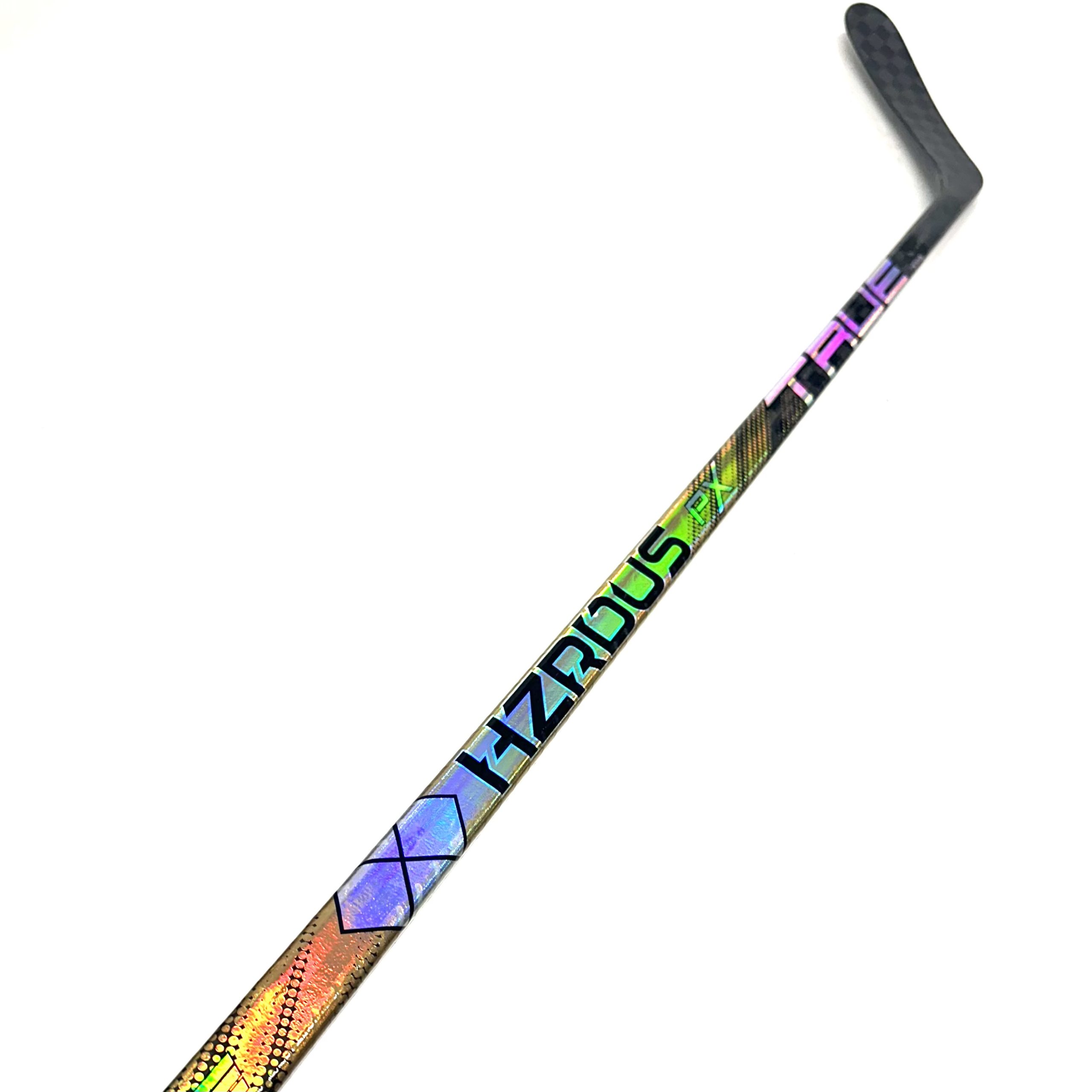
True has grown significantly in the professional ranks over the past several years, and their pro stock product reflects that rise. True sticks are known for their one-piece construction and the distinctive feel that comes from their proprietary carbon weave and blade integration.
Key things to know about True pro stock:
- True’s HZRDUS line appears most often in the pro stock market, with both Smoke and PX variants surfacing from team orders
- True pro stock sticks tend to have a unique feel at the blade — many players describe exceptional puck feedback compared to other brands
- Flex ratings on True sticks can feel slightly different than CCM or Bauer at the same number, so it is worth being attentive to that when sizing
Shop True Pro Stock Hockey Sticks →
Warrior Pro Stock Hockey Sticks
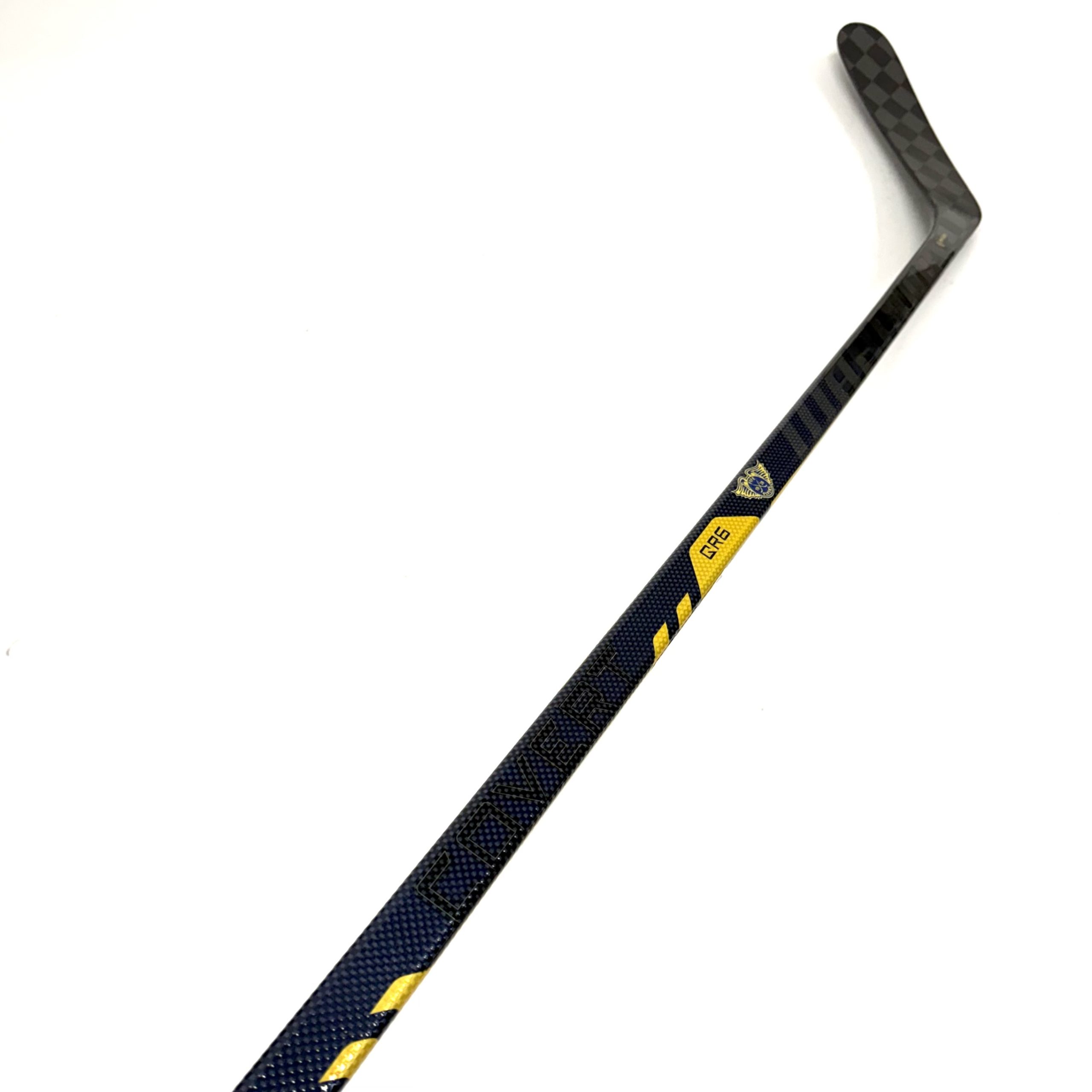
Warrior occupies a loyal niche in the pro stock world. While they outfit fewer teams than Bauer or CCM, the players who use Warrior tend to be enthusiastic advocates, and that loyalty shows up in the secondary market. Warrior pro stock sticks often feature unique curve patterns and shaft geometries that aren’t replicated elsewhere.
Key things to know about Warrior pro stock:
- The Alpha LX2 Pro and Covert QR series are the most commonly available Warrior pro stock models
- Warrior uses its own internal curve naming system — the W77 is one of the most recognizable, known for a mid-toe curve with a moderate lie
- Warrior pro stock shafts tend to have a distinct concave geometry that players either love or find takes adjustment
Shop Warrior Pro Stock Hockey Sticks →
Sherwood Pro Stock Hockey Sticks
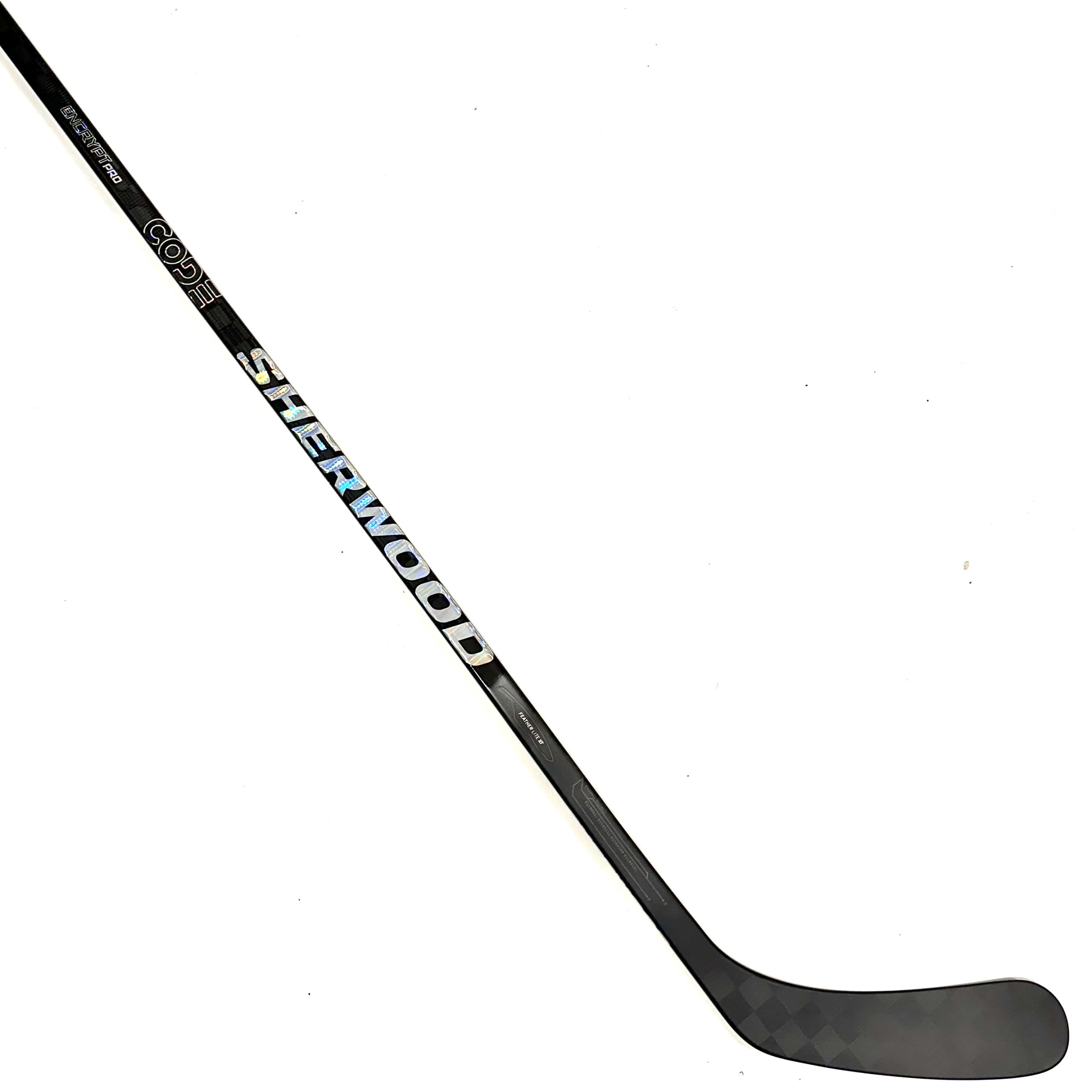
Sherwood is a less common but still relevant presence in the pro stock market.
Their sticks are gaining popularity in the NHL with some big names representing their brand like: Connor Bedard, Juraj Slafkovsky, William Nylander, Quinton Byfield and much more!
Key things to know about Sherwood pro stock:
- Sherwood’s Rekker series is the most recognizable pro stock line and is popular with players who prefer a traditional feel
- Sherwood pro stock sticks are a good entry point for players newer to the pro stock market who want quality without paying premium prices
Shop Sherwood Pro Stock Hockey Sticks →
Frequently Asked Questions
What is the difference between pro stock and retail hockey sticks?
Retail sticks are mass-produced for general consumers with standardized specs.
Pro stock sticks are custom-built for professional players with specific flex profiles, curve variations, shaft shapes, and construction that differ from anything available in a store.
Are pro stock hockey sticks legal for recreational and competitive play?
Yes. Pro stock sticks conform to the same general construction rules as retail sticks and are legal for use in recreational leagues, competitive amateur play, and most sanctioned hockey programs. Always check your specific league’s equipment rules if you’re unsure.
Can I buy pro stock hockey sticks in Canada?
Yes. Reference Hockey is a Canadian retailer offering pro stock sticks from all major brands with shipping across Canada. Because of Canada’s deep professional hockey ecosystem, the available inventory is extensive and regularly updated.
How do I know what flex a pro stock stick is?
Most pro stock sticks are labeled with a flex number on the shaft. However, the actual feel can differ from retail sticks of the same rating depending on kick point placement and construction. When in doubt, consult the listing details or contact the seller directly.
What does it mean when a pro stock stick has ghost graphics?
Ghost graphics refers to newer-technology sticks that have been painted to look like older retail models — usually for branding or sponsorship reasons.
The paint job is older but the stick underneath is newer. This is common
and not a sign of lower quality.
Why are some pro stock sticks cheaper than retail?
Teams order sticks in large volumes, and unused inventory enters the secondary market at prices well below original team cost. You are getting pro-level quality without the retail markup.
What is the most popular pro stock curve?
The P28 is one of the most commonly found and widely used pro stock curves, valued for its versatility across shooting styles. The P92 and P88 are also popular for more position-specific applications.
Do pro stock sticks come with a warranty?
Generally no. Pro stock sticks are sold as-is without manufacturer warranties. This is one trade-off of the pro stock market, and it’s worth factoring into your decision if stick durability is a concern.
How do I tell if a pro stock stick is authentic?
Look for player name markings, team codes, or organizational identifiers on the shaft. Reputable sellers will also provide clear photos and detailed spec information.
What pro stock equipment is available beyond sticks?
Reference Hockey also carries pro stock helmets, gloves, and other protective equipment sourced from the same professional programs.
Browse all pro stock equipment →